
For centuries, people have searched for ways to slow ageing and extend human life. Modern longevity research has shifted that search from mythical fountains of youth to microscopic structures inside our cells.
One of the most discussed structures is the telomere.
Telomeres are often described as biological clocks that reveal how quickly a person is ageing. Some companies even offer telomere-length tests and supplements claiming to protect or lengthen them.
But do longer telomeres really mean a longer life? Can lifestyle changes slow telomere shortening? And could scientists eventually use telomerase to reverse ageing?
The truth is promising, but far more complex than the headlines suggest.
What Are Telomeres?
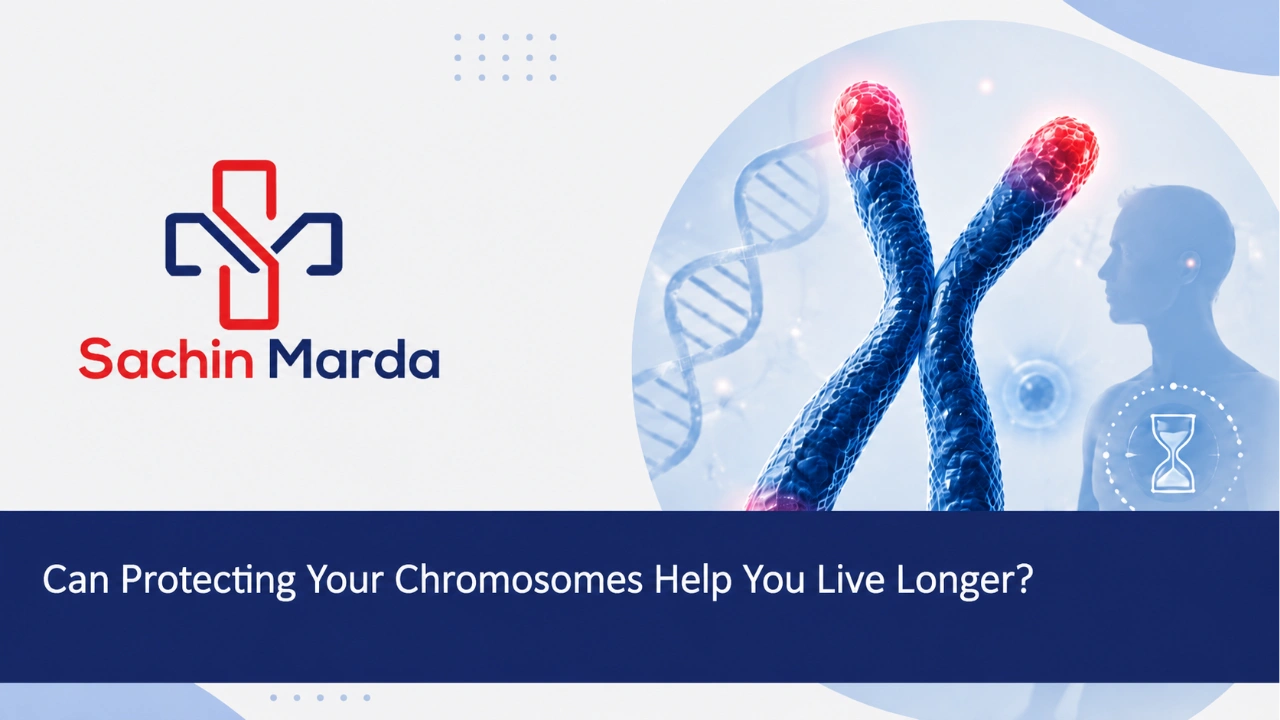
Inside almost every cell in the human body are chromosomes containing DNA—the biological instructions needed for cells to function. Telomeres are protective structures located at the ends of these chromosomes. They consist of repeated DNA sequences and specialised proteins that prevent chromosome ends from being mistaken for broken or damaged DNA. A simple way to understand them is to imagine a shoelace. The small plastic caps at the ends of the lace prevent it from fraying. Telomeres perform a similar protective role for chromosomes. Without properly functioning telomeres, chromosome ends can deteriorate, fuse or trigger a DNA-damage response.Why Do Telomeres Become Shorter?
Whenever most body cells divide, they must copy their DNA. However, the cellular machinery cannot completely copy the very ends of linear chromosomes. As a result, a small section of telomeric DNA may be lost during repeated cell divisions. Telomeres can also be damaged by oxidative stress, inflammation and other forms of cellular stress. This does not mean that every cell division is harmful. Cell division is essential for growth, tissue repair and immune function. Telomere shortening functions partly as a protective limit. It helps prevent damaged cells from dividing indefinitely.What Happens When Telomeres Become Critically Short?
When a telomere becomes too short or loses its protective structure, the cell may recognise the chromosome end as damaged DNA.- Stop dividing and enter cellular senescence
- Undergo programmed cell death
- Continue dividing abnormally if protective control systems have failed
Are Telomeres the Body’s Ageing Clock?
Telomeres generally become shorter with age, but they are not a perfect clock. A large systematic review covering more than 740,000 people found an overall relationship between increasing chronological age and shorter telomeres. However, the association was modest, and telomere length varied considerably between individuals. Two people of the same age can therefore have very different telomere lengths. Telomeres may also differ between tissues within the same person. This means a single blood-based telomere test cannot reliably tell someone:- Their exact biological age
- How long they will live
- Whether they will develop a particular disease
- How quickly their whole body is ageing
What Is Telomerase?
The body has an enzyme called telomerase that can add telomeric DNA back to the ends of chromosomes. Telomerase is active in certain cells that require continued renewal, including some stem cells, reproductive cells and activated immune cells. However, its activity is limited or absent in many ordinary adult body cells. At first glance, activating telomerase might appear to be an ideal anti-ageing strategy:- Restore shortened telomeres
- Allow cells to keep dividing
- Improve tissue repair
- Delay age-related decline
The Telomere–Cancer Paradox?
Normal cells generally cannot divide forever. Critically short telomeres can stop damaged cells from continuing to multiply, making telomere shortening part of the body’s tumour-suppression system. Cancer cells must overcome this limit. Many cancers activate telomerase or another telomere-maintenance pathway, allowing malignant cells to maintain their chromosome ends and continue dividing. This creates a difficult biological balance:- Telomeres that are too short can contribute to cellular dysfunction and tissue decline.
- Uncontrolled telomere maintenance can help abnormal cells become effectively immortal.
- Severe telomere dysfunction can also cause chromosome instability, which may contribute to cancer development under certain conditions.
- Delay age-related decline
Do Longer Telomeres Always Mean Better Health?
Not necessarily. Very short or dysfunctional telomeres are associated with several inherited telomere disorders and problems involving tissues that require frequent renewal, such as bone marrow and the lungs. Telomere shortening has also been studied in relation to ageing, infertility, immune dysfunction, neurodegeneration and other conditions. But longer is not always automatically better. Because cancer cells benefit from maintaining their telomeres, unusually effective telomere maintenance may carry risks in certain biological contexts. What matters is not merely telomere length, but whether telomeres remain stable, appropriately regulated and capable of protecting the genome.Can Lifestyle Protect Telomeres?
Research has linked telomere length or telomere attrition with factors such as chronic stress, smoking, obesity, physical inactivity, poor metabolic health and inflammation. However, these relationships can be difficult to interpret. Telomere length is influenced by genetics, age, health status, tissue type and laboratory measurement methods. An association does not prove that one lifestyle factor directly caused telomeres to shorten or that changing it will substantially extend them. It is therefore better to view healthy habits as ways to support overall cellular and cardiovascular health rather than as guaranteed methods for lengthening telomeres. The most dependable longevity practices remain familiar:
Avoid smoking and tobacco exposure

Exercise regularly
Maintain healthy blood pressure, blood sugar and cholesterol

Eat a nutritionally balanced diet
Sleep adequately
Manage persistent stress

Maintain social connection

Attend age-appropriate health screenings
These actions have benefits that extend far beyond telomeres.
The broader goal should be healthspan—living more years with physical function, independence and wellbeing—not simply achieving a particular laboratory measurement. The World Health Organisation similarly frames healthy ageing around maintaining the functional ability that supports wellbeing in later life.
Can Supplements Lengthen Telomeres?
Various products claim to activate telomerase, prevent telomere shortening or reverse biological ageing. These claims should be approached carefully. Changes reported in small studies do not necessarily demonstrate that a product:- Slows whole-body ageing
- Prevents age-related disease
- Extends human lifespan
- Is safe for long-term use
- Produces meaningful improvements in health
Will Telomeres Help Us Reverse Ageing?
Telomere biology is likely to contribute to future treatments, particularly for diseases caused by abnormal telomere maintenance or inherited telomere defects. Possible research directions include:- Temporarily activating telomerase in selected tissues
- Delivering telomerase-related therapies only to specific cell types
- Repairing defective telomere-maintenance genes
- Protecting telomeres without permanently increasing cell division
- Combining telomere treatments with cancer-surveillance strategies
The Bottom Line
Telomeres are protective chromosome ends that often become shorter as cells divide and organisms age. Critically short or damaged telomeres can push cells into senescence, cell death or genomic instability. Telomerase can rebuild telomeres, but uncontrolled telomerase activity may also allow cancer cells to keep dividing. That is why the relationship between telomeres and longevity cannot be reduced to the idea that longer telomeres always produce a longer life. Telomeres are an important part of ageing biology—but they are only one part. For now, the most scientifically responsible approach is not to chase an unproven telomere-lengthening cure. It is to protect overall health through regular exercise, adequate sleep, balanced nutrition, tobacco avoidance, preventive medical care and effective management of chronic disease. The future of telomere science may be transformative. But the real objective is not cellular immortality. It is helping people remain healthier, stronger and more functional for a greater portion of their lives. Medical disclaimer: This article is intended for general education and is not a substitute for medical diagnosis or treatment. Consult a qualified healthcare professional before using supplements or experimental longevity therapies.Schedule your consultation with Dr. Sachin Marda now.
For a valuable second opinion and expert guidance reach out to Dr. Sachin Marda today. His wealth of knowledge and experience ensures that you will receive top-notch advice and recommendations customized specifically to your needs.
