
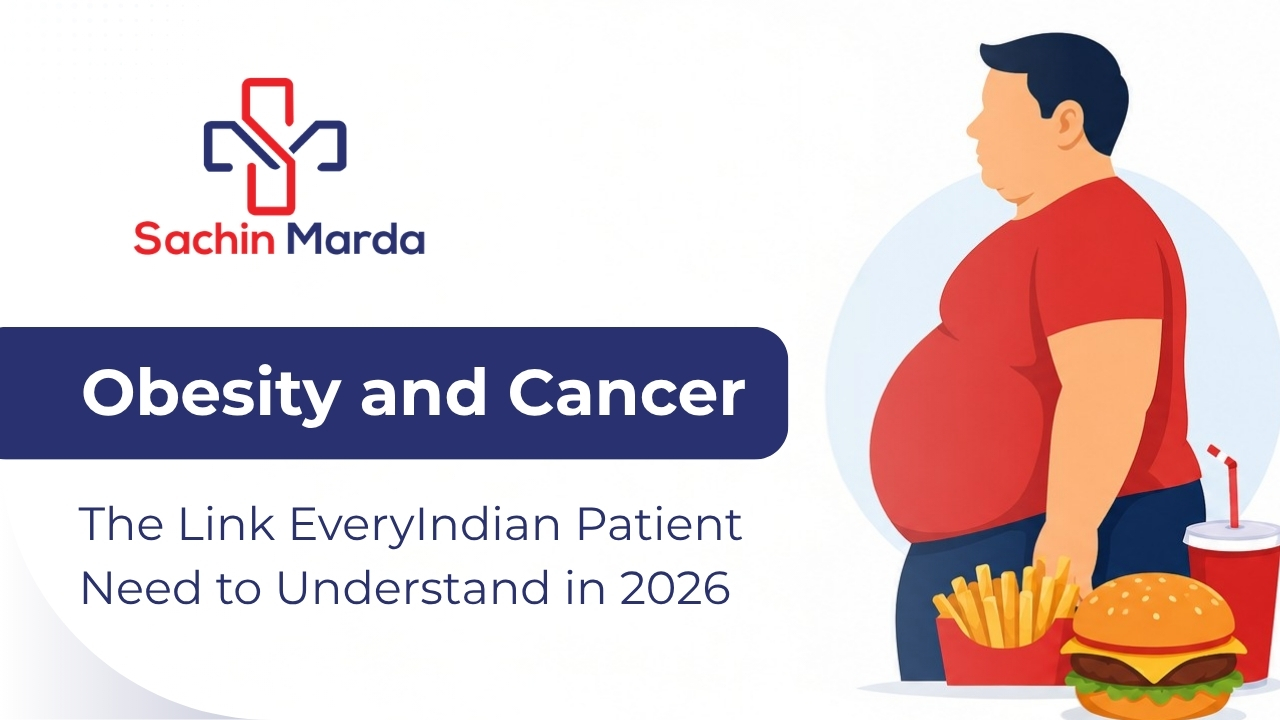
When patients ask me what they can do to reduce their cancer risk, I talk about tobacco, alcohol, and screening. And then I talk about weight. The conversation about obesity and cancer is one that Indian medicine has been slow to have -perhaps because weight is a sensitive topic, perhaps because the connection isn’t as immediately visible as a cough from smoking. But the evidence is clear, and it is growing: excess body weight is associated with a significantly higher risk of at least 13 different types of cancer. This is not a lecture about your body. This is information you deserve to have.
What the Research Tells Us
According to the World Health Organisation and major cancer research bodies, obesity is now considered the second leading preventable cause of cancer globally, after tobacco use. Among the cancers most strongly associated with excess body weight are: breast cancer (post-menopausal), colorectal cancer, endometrial (uterine) cancer, oesophageal cancer, kidney cancer, liver cancer, gallbladder cancer, pancreatic cancer, and stomach cancer. In India, this matters especially because the profile of obesity is changing. We are no longer talking only about people who appear visibly overweight. Research increasingly shows that Indians, due to our genetic makeup, accumulate dangerous visceral fat – fat stored around internal organs-at lower BMI levels than Western populations. A person who appears slim by standard weight charts may still carry significant metabolic risk.How Does Excess Weight Contribute to Cancer Risk?
The mechanisms are multiple and interconnected. Excess fat tissue produces higher levels of certain hormones-including oestrogen and insulin-that may stimulate abnormal cell growth. Chronic inflammation, which is associated with obesity, creates a cellular environment that may encourage tumour development. Excess weight also affects the immune system’s ability to detect and destroy abnormal cells. None of this means that a person with obesity will definitely develop cancer. Or that a person at a healthy weight is immune. Cancer is complex, and no single factor acts alone. But weight is a modifiable risk factor-which means it is something we can actually do something about.
What the Indian Data Tells Us
India is facing a rapid rise in lifestyle-related cancers – colorectal, breast, endometrial, and kidney cancers are all increasing in urban populations, and research links a significant proportion of this rise to changing diet and lifestyle patterns. Urban Indians are consuming more processed foods, more refined sugars, and less fibre than a generation ago. Physical activity has declined dramatically in desk-based professions. These are not character failings – they are structural changes in how we live. But they carry health consequences.What Does This Mean for You Practically?
I want to be clear: I am not asking you to become a different person or to pursue an unrealistic body ideal. The research does not support dramatic weight loss as the sole solution. What it does support are meaningful, sustainable lifestyle changes that collectively reduce risk.

Movement matters more than exercise

Fibre is more protective than most people realise
Processed and ultra-processed foods warrant real attention
A Word on What This Is Not
This is not a guarantee. Eating well and maintaining a healthy weight does not make you cancer-proof. Some people do everything right and still receive a diagnosis. Cancer is not a moral failing, and neither is carrying excess weight. What this is, is information. And having information means you have a choice.Talk to Me
If you have concerns about your weight and cancer risk, or if you have a family history of any of the cancers listed above and want to understand your personal risk level – please come and see me. That is exactly what a consultation is for.
Book your consultation at sachinmarda.com or WhatsApp me at 91-7702013311. I’ll see you soon.
– Dr. Sachin Marda
Schedule your consultation with Dr. Sachin Marda now.
For a valuable second opinion and expert guidance reach out to Dr. Sachin Marda today. His wealth of knowledge and experience ensures that you will receive top-notch advice and recommendations customized specifically to your needs.
