
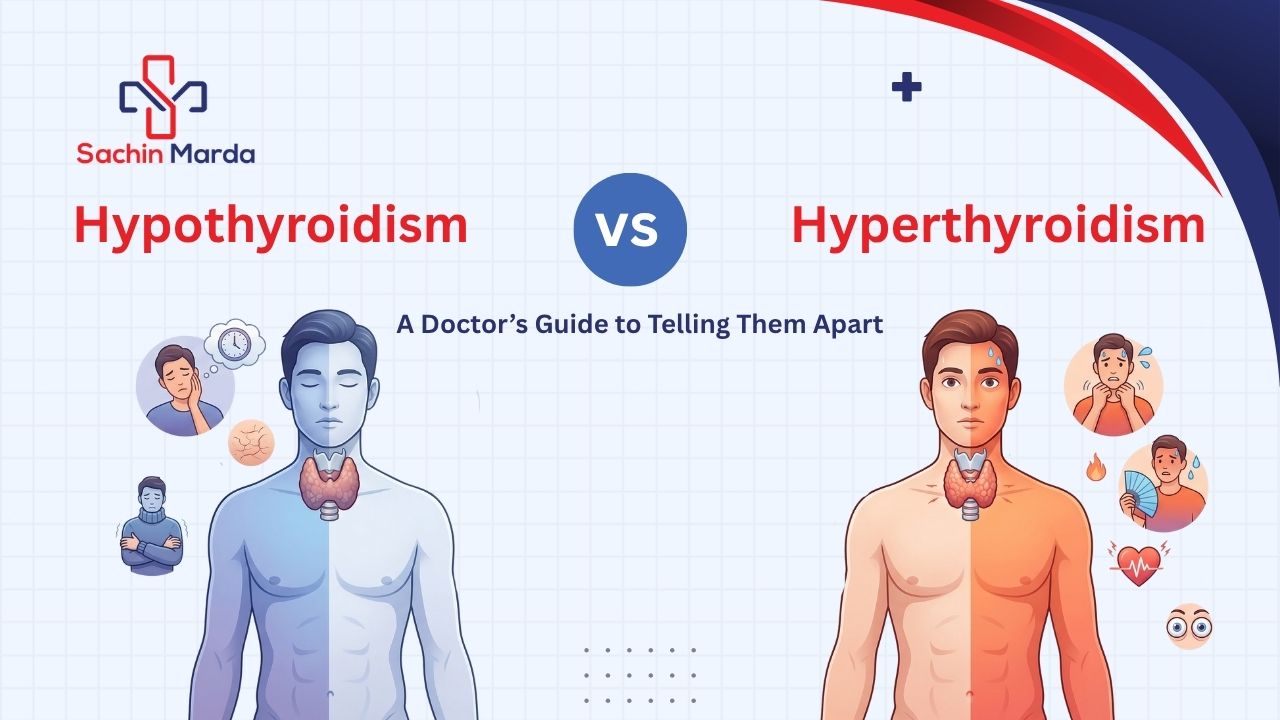
Understanding the Thyroid Gland
To understand the difference between hypothyroidism and hyperthyroidism, you need to first grasp how this remarkable gland functions. Located at the base of your neck, just below your Adam’s apple, the thyroid serves as your body’s metabolic control center.What is the thyroid gland?
The thyroid is a small, butterfly-shaped organ that sits at the front of your neck, wrapping around your windpipe. As part of your endocrine system this gland produces essential hormones that regulate numerous bodily functions. Though small, the thyroid consists of two connected lobes flanking a thin band of tissue called the isthmus. Additionally, it contains special cells (called C cells) that help control calcium levels in your blood.
Function of thyroid hormones (T3 and T4)
Your thyroid produces two primary hormones: thyroxine (T4) and triiodothyronine (T3). These hormones are often collectively referred to as “thyroid hormone”. Essentially, your thyroid makes about 90% T4 (mostly inactive) and 10% T3 (the active form).
After release, T4 is converted to T3 in various tissues throughout your body—including your liver, kidneys, and muscles. This conversion is crucial because T3 is the biologically active form that primarily influences your cells and tissues. Furthermore, these hormones require iodine for production, highlighting why iodine is an essential nutrient in your diet.
How Thyroid Hormones Affect the Body
Thyroid hormones function as chemical messengers, affecting virtually every organ in your body. Indeed, they play critical roles in:

Metabolism
Controls how quickly your body uses calories, affecting weight gain or loss. Increases basal metabolic rate, oxygen consumption, and heat production.

Cardiovascular System
Regulates heart rate, blood pressure, and the strength of your heartbeat. Increases cardiac output and dilates blood vessels.

Brain Development
Essential for normal brain development, especially during fetal development and early childhood.

Temperature Regulation
Helps maintain body temperature by controlling how much heat your body produces.
Digestive System
Influences how quickly food moves through your digestive tract.
Reproductive Health
Necessary for fertility, libido, and maintaining regular menstrual cycles.
Consequently, understanding these functions helps explain why thyroid disorders create wide-ranging symptoms. When your thyroid produces too much hormone (hyperthyroidism), body processes speed up; conversely, too little hormone (hypothyroidism) slows them down.
What is Hypothyroidism?
Hypothyroidism occurs when your thyroid gland doesn’t produce enough thyroid hormones to meet your body’s needs. This common condition affects approximately 1 in 300 people in the United States, with a significantly higher prevalence among females and older individuals.
Definition and overview
Hypothyroidism, also known as underactive thyroid disease, results in a slowdown of your body’s metabolism. This happens when the thyroid can’t make adequate amounts of thyroid hormones, primarily thyroxine (T4) and triiodothyronine (T3). The condition can develop gradually over years, often making symptoms difficult to notice initially.Common causes including Hashimoto’s thyroiditis
In countries with sufficient iodine, Hashimoto’s disease is the most common cause of hypothyroidism. This autoimmune condition occurs when your immune system mistakenly attacks your thyroid gland, causing inflammation and progressive destruction of thyroid tissue. Other causes include thyroid surgery, radiation therapy, certain medications, and rarely, pituitary gland disorders.Symptoms of hypothyroidism
As your metabolism slows down, you might experience fatigue (reported by 83% of patients), weight gain, cold intolerance, constipation, dry skin, and cognitive issues. Additional symptoms include hoarse voice, slowed heart rate, muscle weakness, depression, and hair loss.Hypothyroidism symptoms in females
Women experience hypothyroidism at a rate seven times higher than men. Female-specific symptoms include irregular or heavy menstrual periods, fertility problems, and complications during pregnancy. Postpartum thyroiditis can occur within a year after childbirth, particularly in women with underlying Hashimoto’s thyroiditis.How it is diagnosed
Diagnosis typically involves blood tests measuring thyroid-stimulating hormone (TSH) and thyroid hormones (T4 and sometimes T3). High TSH with low T4 confirms clinical hypothyroidism, whereas high TSH with normal T4 indicates subclinical hypothyroidism. Testing for thyroid antibodies, particularly thyroid peroxidase (TPO) antibodies, helps identify autoimmune causes.
Treatment options and hormone replacement
The standard treatment is daily levothyroxine (synthetic T4) medication, which restores normal hormone levels and eliminates symptoms. Usually, you’ll take this medication once daily on an empty stomach. The dosage typically starts at 1.5-1.8 mcg/kg and requires regular monitoring through blood tests to adjust as needed. Most patients need lifelong treatment.What is Hyperthyroidism?
Unlike hypothyroidism, hyperthyroidism occurs when your thyroid produces excessive amounts of thyroid hormones, causing your body’s functions to accelerate. This condition affects approximately 1.2% of people in the United States.Definition and overview
Hyperthyroidism, or overactive thyroid, happens when your thyroid gland makes more thyroid hormones than your body needs. This results in elevated levels of triiodothyronine (T3) and thyroxine (T4). With too much thyroid hormone, many of your body’s functions speed up.Common causes including Graves’ disease
Graves’ disease accounts for approximately 80% of hyperthyroidism cases. This autoimmune condition causes your immune system to produce antibodies that stimulate your thyroid to overproduce hormones. Other causes include thyroid nodules, thyroiditis, excessive iodine intake, and certain medications.Hyperthyroidism symptoms in females
Women with hyperthyroidism may experience irregular or lighter menstrual periods and fertility issues. Pregnant women face increased risks of severe morning sickness, miscarriage, and stillbirth. General symptoms include rapid heartbeat, anxiety, weight loss, heat sensitivity, and tremors.How it is diagnosed
Diagnosis typically involves blood tests measuring TSH, T3, and T4 levels. Low TSH with high T3/T4 indicates hyperthyroidism. Additional tests may include thyroid antibody tests, radioactive iodine uptake tests, and ultrasound imaging.Treatment options and medications
Treatment options include antithyroid medications (methimazole or propylthiouracil), radioactive iodine therapy, and thyroid surgery. Beta-blockers may help manage symptoms like rapid heartbeat and tremors until other treatments take effect.Key Differences and Management Tips
Distinguishing between hypothyroidism and hyperthyroidism requires understanding their opposite effects on your body. This knowledge is crucial for proper management and preventing complications.Comparison of symptoms and hormone levels
The symptoms of these conditions are often mirror images of each other. Hypothyroidism slows your metabolism, causing fatigue, weight gain, cold sensitivity, and slower heart rate. In contrast, hyperthyroidism speeds up bodily processes, resulting in anxiety, weight loss, heat sensitivity, and rapid heartbeat. Blood tests reveal distinctive patterns: hypothyroidism typically shows high TSH with low T4/T3 levels, whereas hyperthyroidism presents with low TSH and elevated T4/T3 levels.How to manage each condition
Hypothyroidism treatment primarily involves daily levothyroxine medication taken on an empty stomach, ideally 30-60 minutes before breakfast. Regular blood tests help adjust dosage for optimal results. For hyperthyroidism, treatment options vary based on the cause. These include antithyroid medications (methimazole or propylthiouracil), radioactive iodine therapy to destroy thyroid tissue, thyroid surgery, or beta-blockers to manage symptoms.Diet and lifestyle considerations
Although no specific diet cures thyroid disorders, maintaining balanced nutrition supports overall thyroid health. Notably, individuals with hypothyroidism should maintain normal iodine intake (150 micrograms daily). Spacing calcium supplements, iron, and fiber at least four hours from thyroid medication improves absorption. Regular exercise, adequate sleep (7-9 hours nightly), and stress management techniques can help manage symptoms for both conditions.When to see a doctor
Seek medical attention if you experience clusters of symptoms like persistent fatigue, unexplained weight changes, mood disturbances, or menstrual irregularities. Generally, early diagnosis through blood tests ensures proper treatment and prevents complications.Long-term health risks if untreated
Untreated hypothyroidism can lead to:- Heart problems and increased cholesterol
- Peripheral neuropathy
- Infertility and birth defects
- Depression and cognitive issues
- Myxedema coma (rare but life-threatening)
Conclusion
FAQs
What are the main differences between hypothyroidism and hyperthyroidism?
Hypothyroidism is an underactive thyroid condition where the gland doesn’t produce enough hormones, leading to symptoms like fatigue, weight gain, and cold sensitivity. Hyperthyroidism, on the other hand, is an overactive thyroid condition resulting in excessive hormone production, causing symptoms such as anxiety, weight loss, and heat intolerance.
How are thyroid disorders diagnosed?
Thyroid disorders are primarily diagnosed through blood tests that measure thyroid-stimulating hormone (TSH) and thyroid hormone levels (T3 and T4). For hypothyroidism, TSH levels are typically high while T4 is low. In hyperthyroidism, TSH is usually low with elevated T3/T4 levels. Additional tests may include thyroid antibody tests and imaging studies.
Can thyroid disorders cause digestive issues?
Yes, thyroid disorders can affect the digestive system. Hypothyroidism may lead to constipation due to slowed metabolism, while hyperthyroidism can cause increased bowel movements or diarrhea. These digestive symptoms are often accompanied by other thyroid-related symptoms and should be evaluated by a healthcare provider.
How do thyroid conditions affect women differently?
Women are more prone to thyroid disorders and may experience unique symptoms. In hypothyroidism, women might have irregular or heavy menstrual periods and fertility issues. Hyperthyroidism in women can cause lighter or irregular periods and increase risks during pregnancy. Both conditions can impact overall reproductive health and require careful management.
What are the long-term risks of untreated thyroid disorders?
If left untreated, both hypothyroidism and hyperthyroidism can lead to serious health complications. Untreated hypothyroidism may result in heart problems, increased cholesterol levels, peripheral neuropathy, and cognitive issues. Hyperthyroidism, when not managed, can lead to atrial fibrillation, stroke, congestive heart failure, and osteoporosis. Early diagnosis and proper treatment are crucial to prevent these long-term health risks.
Schedule your consultation with Dr. Sachin Marda now.
For a valuable second opinion and expert guidance reach out to Dr. Sachin Marda today. His wealth of knowledge and experience ensures that you will receive top-notch advice and recommendations customized specifically to your needs.
