
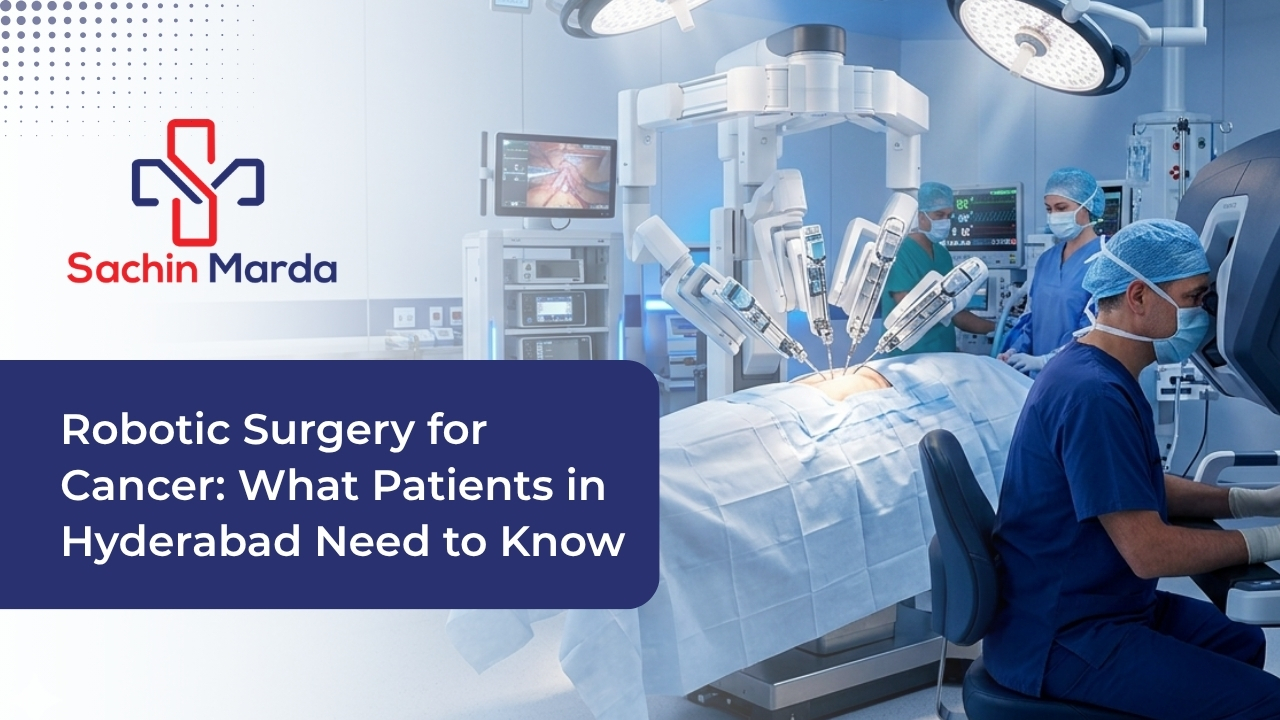
When one of my patients first heard the words “robotic surgery,” she pictured a machine operating on her alone in a room. No surgeon, No human hands. She almost refused the procedure before we had a chance to talk.
I’m glad we talked.
Robotic surgery is one of the most misunderstood advances in modern cancer care. And in my experience of more than 11,000 surgeries, it is also one of the most powerful tools we have for giving patients better outcomes, faster recovery, and less time away from the lives they love.
Let me explain what it actually is – and whether it might be right for you.
What Robotic Surgery Actuaily Means
Robotic surgery does not mean a robot operates on you independently. It means I, your surgeon, operate through a highly advanced system that translates my hand movements into precise, controlled motion through tiny instruments. I sit at a console a few feet from the operating table. I see a magnified, high-definition 3D view of your anatomy. The robotic arms which I control entirely – filter out any tremor, move with greater precision than the human hand alone, and can reach angles that would be impossible in traditional open surgery. You still have a surgeon. You have a more capable version of one.How It Differs from Traditional Open Surgery
In open surgery, I make a larger incision to access the area being operated on. This is sometimes the right approach-and I still perform open surgeries when the situation calls for it. But when robotic surgery is appropriate, the advantages for the patient are significant. The incisions are smaller typically 4 to 5 tiny cuts instead of one large opening. Blood loss during surgery is reduced. The risk of infection is lower. Pain after surgery is more manageable. And recovery time is genuinely faster-many of my robotic surgery patients are back home within a few days and back to normal activity within weeks, rather than months. For the surgeon, the precision of robotic instruments allows me to work around delicate structures-nerves, blood vessels, organs-with a level of control that protects your surrounding healthy tissue..Which Cancers Can Be Treated with Robotic Surgery?
Not every cancer requires surgery, and not every surgery is suited to the robotic approach. But robotic surgical oncology is appropriate for a growing range of cancer types. At Yashoda Hospitals in Hyderabad, I perform robotic procedures for:
Gastrointestinal Cancers
(Stomach, Colon, Rectum)

Gynaecological Cancers
(Uterus, Cervix, Ovaries)
Urological Cancers
(Kidney, Bladder, Prostate)
Certain Thoraci'c Cancers

Head and Neck Cancers
What to Expect If You’re Considering Robotic Surgery
The first step is a consultation where we review your diagnosis, imaging, biopsy reports, and medical history. I explain all your surgical options-not just robotic surgery – and we decide together what is best for your specific situation. If robotic surgery is the recommended path, you will undergo standard pre-operative preparation. On the day of surgery, you will be under general anaesthesia and will not feel or remember the procedure. Most robotic surgeries at our centre are completed within 2 to 4 hours depending on complexity. After surgery, you will be monitored in the hospital for 2 to 5 days in most cases. Pain management is straightforward. Most patients are surprised by how well they feel within the first week.A Question I Get Often: Is Robotic Surgery Safe?
Yes when performed by an experienced robotic surgical oncologist at a well-equipped centre. Like any surgical procedure, there are risks, and I discuss these with every patient honestly before we proceed. What I can tell you is that robotic surgery, in my experience, has consistently delivered excellent outcomes- in terms of cancer removal, complication rates, and patient recovery.
The technology is only as good as the surgeon behind it. And this is why choosing your surgeon – their training, their experience, their number of robotic procedures performed-matters enormously.
If You Have Questions, I’m. Here
If you or someone in your family has received a cancer diagnosis and you’re wondering whether robotic surgery is an option, please don’t rely on what you read on WhatsApp or from a neighbour’s experience. Every cancer is different. Every patient is different. Book a consultation at sachinmarda.com, or WhatsApp us at 7702013311. I review every case personally. The goal is always the same – the best possible outcome, for you. – Dr. Sachin Marda, Senior Consultant Surgical Oncologist & Robotic Surgeon, Yashoda Hospitals, HyderabadSchedule your consultation with Dr. Sachin Marda now.
For a valuable second opinion and expert guidance reach out to Dr. Sachin Marda today. His wealth of knowledge and experience ensures that you will receive top-notch advice and recommendations customized specifically to your needs.
